Emperor penguin
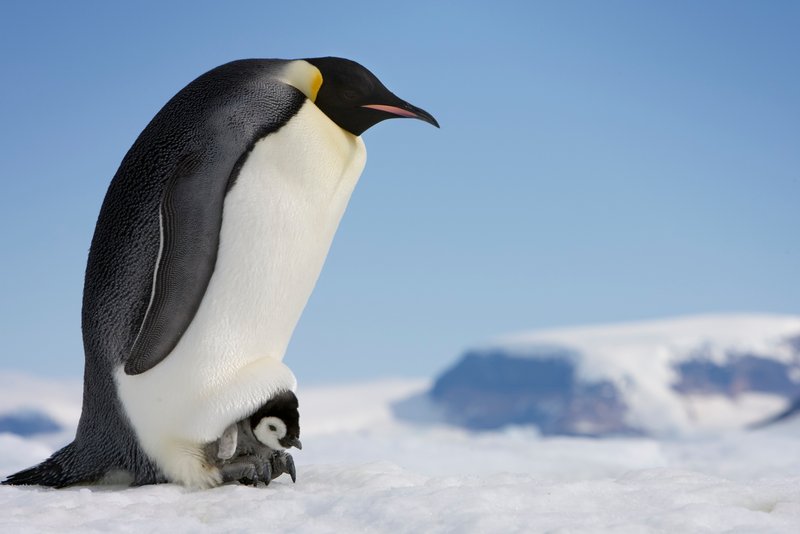
Image information and credit
An adult penguin with a chick on its feet, named in the purchased file’s embedded title as an emperor penguin and chick in Antarctica. Exact location is not confirmed. Credit as embedded in the purchased file: Paul - stock.adobe.com. Adobe Stock 378214134. Rights: owner-attested purchased; licence type (Standard or Extended) unknown. Official Adobe Stock listing not live-verified (lookup blocked with HTTP 403 on 24 Nov 2026 and not retried). Identification is based on the file’s embedded metadata and a local visual review, not an official live listing.
Aptenodytes forsteri is the largest living penguin species, with a breeding cycle and cold-adapted behaviour closely tied to Antarctic conditions.
Identification and relationships
The emperor penguin’s scientific name is Aptenodytes forsteri. It is the largest living penguin species and, like all penguins, is a flightless bird. Its closest relatives are king penguins. A reliable identification should use more than a stock-image label: species identity, scene and the evidence attached to a photograph need to agree.
Where emperors breed
Emperor colonies occur around the Antarctic continent. The Australian Antarctic Program explains that most colonies are on fast ice, meaning sea ice held in place between islands or grounded icebergs. That is a more specific setting than simply saying that all penguins live on floating ice. Colony circumstances vary, so a general species photograph should not be presented as evidence about an unverified named colony.
A winter breeding cycle
Emperors breed during the Antarctic winter. Males carry out incubation, while parents share parental duties after the chick hatches. Insulating feathers, body fat, heat exchange in blood vessels and cooperative huddling all contribute to meeting the demands of this season. Huddling reduces exposure and allows birds to move among relatively warmer and colder positions.
Food and diving
These penguins feed at sea. Their diet includes fish, Antarctic krill and squid; the Australian Antarctic Program identifies Antarctic silverfish as one frequently eaten prey species. The mix changes with season. Emperors are accomplished divers, but a single record dive should not be treated as the depth or duration of every feeding trip.
Change and conservation information
The Australian Antarctic Program links future population pressures to projected climate change and lists the species as endangered on the page checked for this article. That is an attributed statement from the cited programme, not an independently verified claim about the date or wording of every conservation assessment. Current assessments and their criteria should be read directly when a precise classification is needed.
This profile supplies a stable species identity for related articles, images and educational material. Operational weather reports and individual webcam views remain separate records and cannot establish the condition of the species as a whole.
Sources and factual review
- Emperor penguin — Australian Antarctic Program; checked 2026-11-24.
Published: 2026-11-24T06:43:52.850982+00:00 · Substantive update: 2026-11-24T06:43:52.850982+00:00 · Factual review: 2026-11-24T06:43:52.850982+00:00