Responsible wildlife viewing
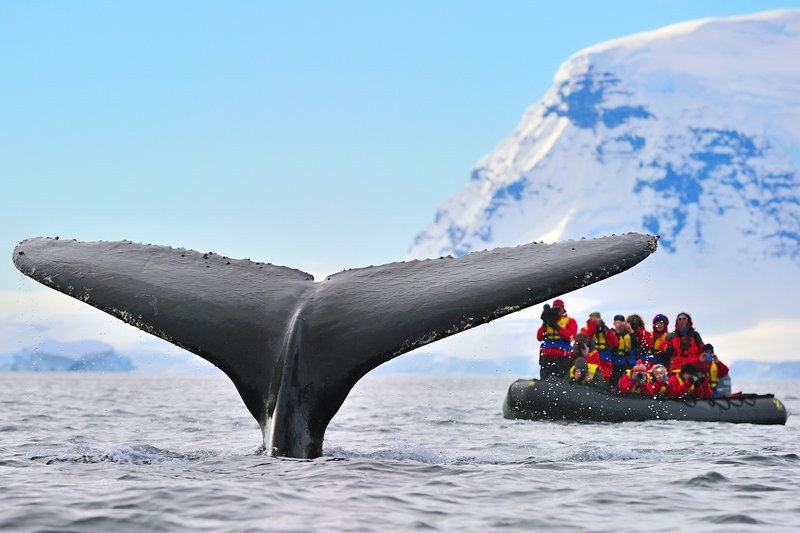
Image information and credit
A whale diving close to a small boat of tourists with cameras, named in the purchased file’s embedded title as a humpback whale in Antarctica. Exact location is not confirmed. The scene is used to illustrate wildlife viewing, not as the humpback species-page hero. Credit as embedded in the purchased file: Tony - stock.adobe.com. Adobe Stock 377866877. Rights: owner-attested purchased; licence type (Standard or Extended) unknown. Official Adobe Stock listing not live-verified (lookup blocked with HTTP 403 on 24 Nov 2026 and not retried). Identification is based on the file’s embedded metadata and a local visual review, not an official live listing.
Responsible Antarctic wildlife viewing means avoiding disturbance, keeping animals’ routes clear and following the current rules for the species, site and season. A minimum distance is a floor, not a promise that approaching to that distance will be harmless.
Responsible Antarctic wildlife viewing means avoiding disturbance, keeping animals' routes clear and following the current rules for the species, site and season. A minimum distance is a floor, not a promise that approaching to that distance will be harmless.
Seasonal guidance checked:24 November 2026. The IAATO 2026–27 wildlife-disease protocol is linked in the sources. This guide does not certify that any landing site is currently open or disease-free.
On this page: Distance and behaviour · Biosecurity · Before landing
Distance is only the first question
The general Antarctic visitor guidelines say to keep at least 5 metres from wildlife on land in general, while recognising that greater distances may be necessary and that species- or site-specific guidance applies. Do not turn that general figure into a universal approach distance for every animal, vessel, site or season. Potentially dangerous or territorial animals require additional caution and space.
Give animals the right of way. Do not stand across a route between a colony and the sea, surround individuals or enter the margins of a colony to obtain a photograph. Move slowly and keep noise low. If an animal changes its behaviour because of your presence, stop moving or slowly increase the distance as appropriate; being outside a nominal minimum is not permission to continue disturbing it.
Do not feed or touch wildlife, and never use a close encounter as proof that an animal is comfortable. A zoom lens or binoculars can help you observe without closing the gap. Keep the guide's instructions ahead of the photograph you hoped to take.
Clean equipment and avoid ground contact
The current IAATO 2026–27 protocol asks visitors to thoroughly clean and disinfect clothing and equipment before travel. It recommends considering separate clothing and equipment for gateway-country exploration and avoiding areas where avian influenza is known or suspected before the expedition.
In Antarctic wildlife areas, that protocol requires visitors not to sit or lie down and not to put equipment on the ground or snow. Do not set down a camera bag just because the surface looks clean. Follow the operator's daily biosecurity procedures and any stricter instructions. The protocol is seasonal guidance, not a guarantee that pathogens are absent or a substitute for the applicable permit and local requirements.
Ask what applies today
- Ask which species- and site-specific distances and access limits apply.
- Check that clothing, footwear and equipment have completed the required cleaning process.
- Know where animals move between water, resting areas and nests, and leave those routes clear.
- Keep belongings under control so they do not touch the ground in wildlife areas.
- Be ready to stay aboard, change plans or leave if the expedition team determines that a visit cannot proceed responsibly.
The operator's current briefing is essential because this independently written guide does not publish live closure or outbreak information. Use the official IAATO preparation page and the latest documents it links before departure, rather than relying on a saved copy from an earlier season. For broader context see visiting Antarctica and the Antarctic Peninsula profile.
Sources and factual review
- General Guidelines for Visitors to the Antarctic — Antarctic Treaty Consultative Meeting; hosted by IAATO; checked 2026-11-24T08:56:09.082079+00:00.
- IAATO2026–27 Avian Influenza & Wildlife Disease Protocols — International Association of Antarctica Tour Operators; checked 2026-11-24T08:56:09.082079+00:00.
Published: 2026-11-24T09:10:17+00:00 · Substantive update: 2026-11-24T09:10:17+00:00 · Factual review: 2026-11-24T09:10:17+00:00