What is the difference between Antarctica and the Arctic?
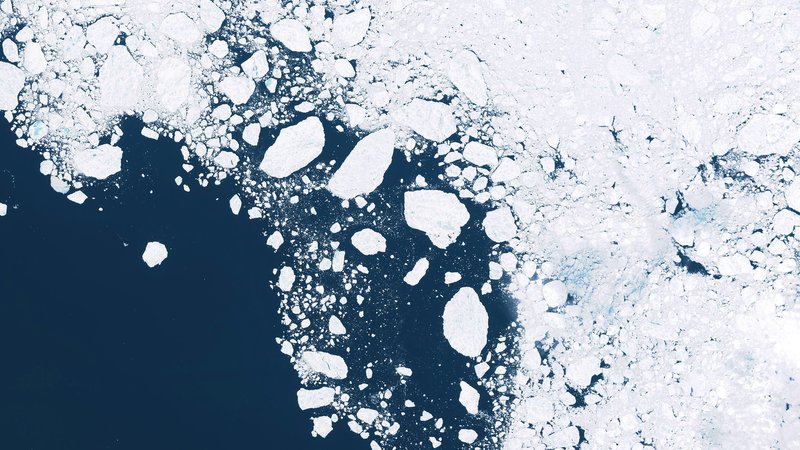
Image information and credit
A satellite-style view of broken ice and dark water. The purchased file’s embedded title describes glaciers and ice melting in the North. It is not a photograph of Antarctica and is used only to illustrate a North/Arctic comparison, with that limitation stated in the caption. Credit as embedded in the purchased file: Alexander - stock.adobe.com. Adobe Stock 357395299. Rights: owner-attested purchased; licence type (Standard or Extended) unknown. Official Adobe Stock listing not live-verified (lookup blocked with HTTP 403 on 24 Nov 2026 and not retried). Identification is based on the file’s embedded metadata and a local visual review, not an official live listing.
Antarctica is a southern continent surrounded by ocean; the Arctic is centred on an ocean largely surrounded by land. That reversed geography helps explain differences in their ice, wildlife and the way maps represent them.
Two kinds of polar ice
Sea ice is frozen seawater. It expands and contracts with the seasons in both polar regions. Much Antarctic sea ice forms and melts within a year, while a substantial part of Arctic sea ice can survive summer. These are broad patterns, not a promise about conditions in a particular month or place. Antarctica also carries a great ice sheet resting on land. Greenland has an ice sheet too, but Greenland is not the whole Arctic. Comparing an Antarctic land-ice measurement with an Arctic sea-ice measurement mixes different categories.
Similar-looking does not mean interchangeable
Polar bears do not naturally live in Antarctica, and penguins do not naturally live in the Arctic. An attractive polar photograph therefore needs a real identification rather than a generic snow-and-ice label. Human geography also differs: the northern polar region is not an empty counterpart of Antarctic research stations.
Compare like with like
Before comparing temperatures or ice changes, identify the location, season, variable and reference period. Neither one unusually cold day nor a single photograph describes the climate of an entire polar region.
Sources and factual review
- Ice Sheets — National Snow and Ice Data Center; checked 2026-11-24.
- Sea Ice — National Snow and Ice Data Center; checked 2026-11-24.
Published: 2026-11-24T07:58:29+00:00 · Substantive update: 2026-11-24T07:58:29+00:00 · Factual review: 2026-11-24T07:58:29+00:00