How does Antarctic ice affect sea level?
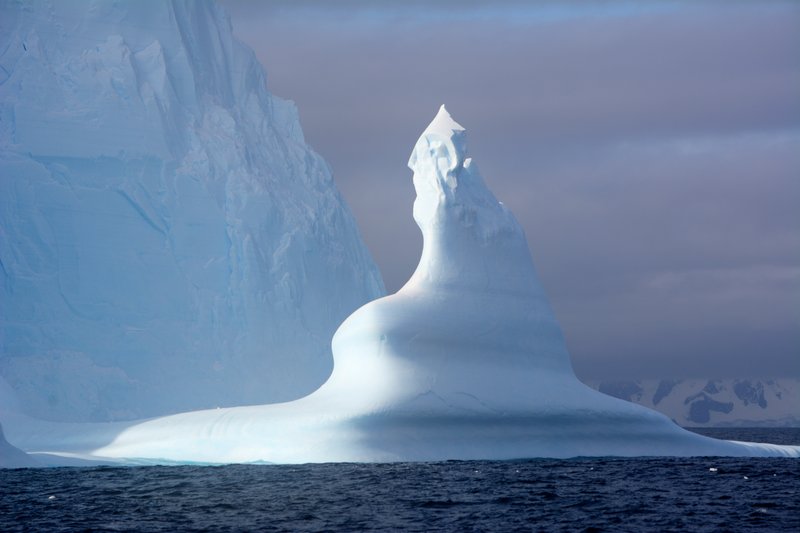
Image information and credit
A massive iceberg in open water. The purchased file’s embedded title describes a massive iceberg in the frigid waters of Antarctica. Exact location is not confirmed. The image is a general illustration for a sea-level topic; it does not depict a measured sea-level event. Credit as embedded in the purchased file: turventur - stock.adobe.com. Adobe Stock 605019721. Rights: owner-attested purchased; licence type (Standard or Extended) unknown. Official Adobe Stock listing not live-verified (lookup blocked with HTTP 403 on 24 Nov 2026 and not retried). Identification is based on the file’s embedded metadata and a local visual review, not an official live listing.
Antarctic land-ice loss can raise global sea level when water stored on land reaches the ocean. Floating sea ice and ice shelves require a different explanation: their direct melting is not equivalent to adding the same amount of previously grounded ice.
Follow the mass balance
An ice sheet gains mass mainly through snowfall and loses it through processes including melting and ice discharge. Scientists combine observations to estimate the balance over time. A local increase in snowfall does not by itself settle whether the entire ice sheet is gaining or losing mass. The National Snow and Ice Data Center describes Antarctica's ice as a major store of water and explains how changes in its mass affect the oceans. A complete-melt equivalent is a way to express the size of that store, not a prediction that all of it will melt on a stated date.
Why floating shelves still matter
An ice shelf can influence the discharge of the grounded glaciers feeding it. Ocean-driven thinning or a change in shelf structure may therefore affect the ice behind the floating front. The important link is the behaviour of the connected system, not simply the melting of an iceberg.
Read projections carefully
A sea-level projection needs a time horizon, an emissions scenario and an uncertainty range. Global average rise also differs from local coastal effects. Avoid turning one dramatic image or a theoretical maximum into a forecast for a particular city.
Sources and factual review
- Ice Sheets — National Snow and Ice Data Center; checked 2026-11-24.
- Sea Ice — National Snow and Ice Data Center; checked 2026-11-24.
Published: 2026-11-24T07:58:29+00:00 · Substantive update: 2026-11-24T07:58:29+00:00 · Factual review: 2026-11-24T07:58:29+00:00