How did Antarctic exploration change from sledges to aircraft?
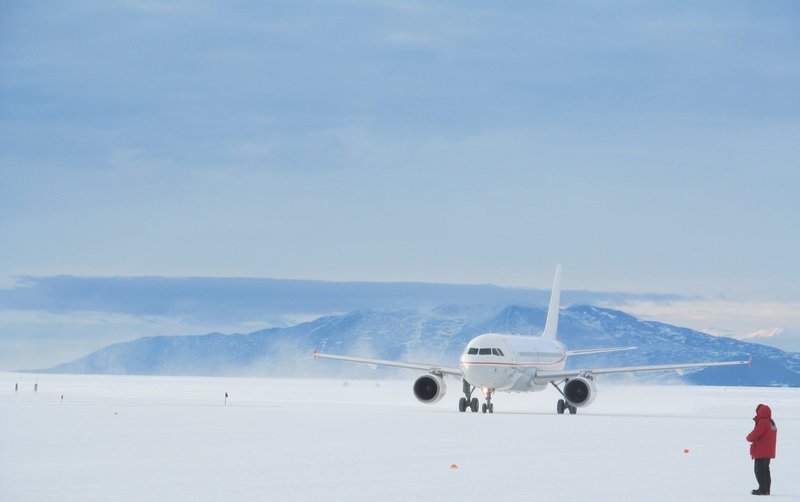
Image information and credit
An aircraft taxiing on an ice runway. The purchased file’s embedded title is “Polar Flight, Ice Runway, Aircraft Taxiing - 2013”. This is a modern (2013) scene, not a historical sledge-era photograph, and the exact airfield is not named. Credit as embedded in the purchased file: DaleHelm - stock.adobe.com. Adobe Stock 371937297. Rights: owner-attested purchased; licence type (Standard or Extended) unknown. Official Adobe Stock listing not live-verified (lookup blocked with HTTP 403 on 24 Nov 2026 and not retried). Identification is based on the file’s embedded metadata and a local visual review, not an official live listing.
Aircraft added aerial reconnaissance, surveying and faster transport to Antarctic exploration, but they did not make ships, surface travel or field skills obsolete. The history is a change in connected capabilities, not a clean replacement of one heroic era by another.
Looking from above
The British Antarctic Territory's historical timeline records Scott's balloon reconnaissance in 1902 and the first powered Antarctic flight by Hubert Wilkins and Carl Ben Eielson from Deception Island in 1928. A balloon ascent and a powered flight are different milestones and should be labelled accordingly. Aerial surveying later helped establish the shape of the Antarctic Peninsula. Seeing a landscape from the air could answer questions that were slow or difficult to resolve from the coast alone, although observations still needed surveying and interpretation.
A continuing logistics problem
An aircraft needs a suitable landing surface, fuel, maintenance, communications and acceptable weather. A flight capability is therefore part of an operating system, not a guarantee that every destination can be reached on demand. Surface parties still need equipment and contingency plans.
Read expedition accounts in context
Compare objectives, route, equipment and conditions rather than simply ranking journeys by speed. A scientific survey, a resupply flight and a long overland crossing do different jobs. Modern research continues to combine ships, aircraft and ground transport according to the task.
Sources and factual review
- UK in Antarctica: historical milestones — British Antarctic Territory; checked 2026-11-24.
Published: 2026-11-24T07:58:29+00:00 · Substantive update: 2026-11-24T07:58:29+00:00 · Factual review: 2026-11-24T07:58:29+00:00